When purchasing an LED display, you will encounter many technical specifications and performance indicators. However, before comparing products, you should first identify your specific requirements and then evaluate which display best meets those needs.
The following factors can help you choose a high-quality LED display.
A higher-resolution LED display delivers sharper images, finer details, and a more immersive viewing experience. If your application requires close viewing distances, prioritize a display with a smaller pixel pitch and higher resolution.
The contrast ratio directly affects image quality. Displays with higher contrast ratios produce deeper blacks, brighter highlights, and more vibrant colors. As a result, viewers enjoy richer visuals and improved content visibility.
Refresh rate plays a critical role in image smoothness. A higher refresh rate reduces screen flickering, improves motion clarity, and creates a more comfortable viewing experience, especially for live events, broadcasts, and dynamic video content.
Viewing angle requirements depend on your installation environment and audience behavior.
If viewers primarily face the screen directly, a narrower viewing angle may be sufficient. For example, conference room displays usually do not require extremely wide viewing angles.
However, if people will view the screen from different positions, such as in shopping malls, retail stores, airports, or exhibition halls, choose an LED display with a wider viewing angle to maintain consistent image quality across the entire viewing area.
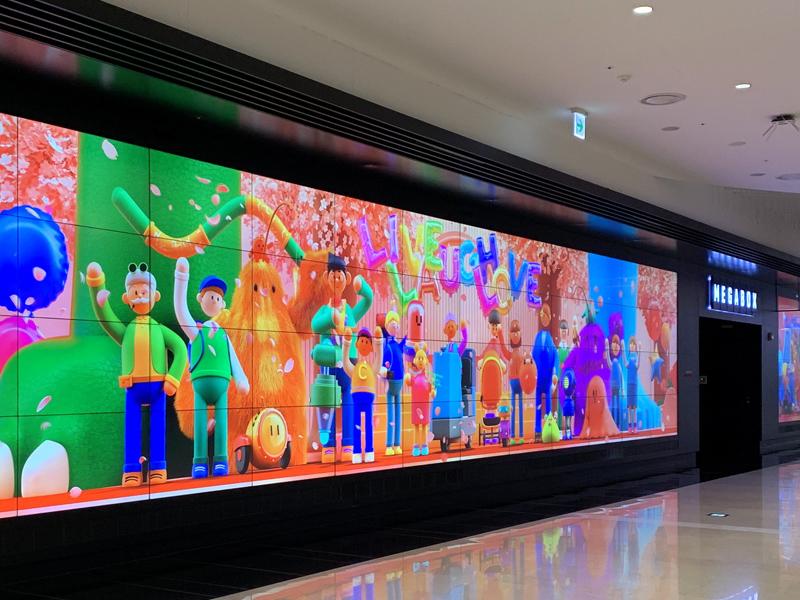
The power consumption of an LED display depends on several factors, including display technology, brightness level, pixel pitch, and screen size. Application scenarios also influence energy usage significantly.
For example, outdoor LED displays typically consume more power than indoor displays because they require much higher brightness levels to remain visible under direct sunlight.
The table below illustrates typical power consumption values for different LED display types:
|
Display Type |
Power Consumption (W/m²) |
Maximum Brightness (nits) |
|
P4 Indoor LED Display |
290 |
1,800 |
|
P6 Indoor LED Display |
290 |
1,800 |
|
P6 Outdoor LED Display |
375 |
7,000 |
|
P8 Outdoor LED Display |
400 |
7,000 |
|
P10 Outdoor LED Display |
450 |
7,000 |
|
P10 Energy-Saving Outdoor LED Display |
200 |
7,000 |
As the data shows, outdoor LED displays generally consume more electricity than indoor models. In many cases, larger pixel pitches can also lead to higher overall power consumption depending on the display configuration and brightness requirements.
If your project requires high brightness and long operating hours, selecting an energy-efficient LED display can significantly reduce operating costs over time. Modern energy-saving LED screens deliver excellent visual performance while lowering electricity consumption and improving return on investment.
Most LED display manufacturers offer warranties ranging from three to five years. With proper maintenance, however, a high-quality LED display can operate reliably for more than seven years.
Before making a purchase, carefully review the warranty terms and service policies. In addition to the warranty period, evaluate the manufacturer's technical support, spare parts availability, repair services, and response times. Reliable after-sales support can reduce downtime and help protect your investment throughout the display's lifespan.
 Hot News
Copyright © 2025 by Shenzhen Aishang Display Technology Co., Ltd - Privacy policy
 EN
EN